
Why Dutch Bucket Systems Dominate Commercial Hydroponics
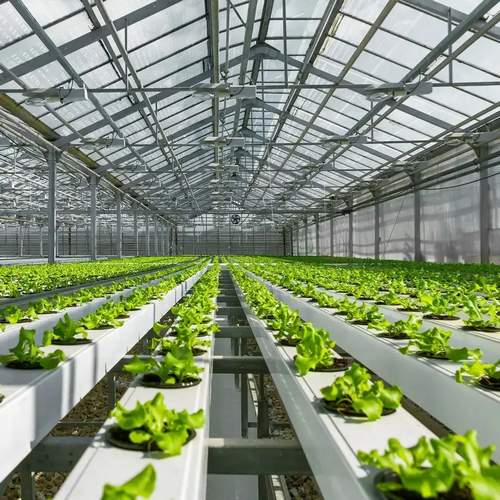
The Dutch Bucket system, also known as Bato Bucket hydroponics, has become the gold standard for commercial greenhouse operations growing tomatoes, peppers, cucumbers, and other fruiting vegetables. This method combines the precision of hydroponic nutrient delivery with the simplicity of individual container culture, allowing growers to achieve exceptional yields while maintaining flexibility in crop management.
At our facility, we have standardized on 11-liter Bato buckets for all our fruiting vegetable production. The design facilitates superior drainage while maintaining adequate moisture retention for healthy root development. Each bucket accommodates a single plant, enabling precise individual plant nutrition monitoring and targeted harvest scheduling.
Optimizing Yield Per Square Meter
Commercial Dutch Bucket operations routinely achieve 40-50kg per square meter for tomato crops, provided that several critical parameters are maintained. The primary factors include nutrient electrical conductivity (EC) levels between 2.5-3.5 mS/cm depending on growth stage, pH maintenance in the 5.8-6.3 range, and substrate temperature control between 18-22°C.
Drip irrigation scheduling requires particular attention. We use cycle irrigation with 4-6 pulses daily, each delivering 2-3分钟 of fertigation. The drainage percentage should maintain 20-30% runoff to prevent salt accumulation while ensuring adequate nutrition. Modern Dutch Bucket installations often incorporate recirculating systems that capture and reprocess this runoff, significantly reducing fertilizer consumption.
System Components and Configuration
A typical Dutch Bucket setup includes growing buckets with integrated saucers, a main feed line with individual drippers, a recirculation reservoir, and a drainage collection system. The growing medium usually consists of perlite, coco coir, or rockwool cubes, each offering distinct advantages for specific crop requirements and climate conditions.
The bato bucket design facilitates automatic draining through slots in the bucket bottom, while the saucer captures excess nutrient solution and returns it to the reservoir via gravity. This closed-loop approach minimizes waste and ensures consistent nutrition across all plants in the system.
Conclusion
Dutch Bucket hydroponics represents the intersection of proven agricultural science and modern engineering efficiency. For commercial growers seeking reliable, scalable production systems, the Bato bucket configuration offers a mature, well-documented approach that continues to deliver exceptional results across diverse crop varieties and climate conditions.
