

Dutch bucket hydroponic systems represent the industry standard for commercial fruiting vegetable production, particularly for tomatoes, peppers, and cucumbers. The individual bucket configuration provides per-plant nutrient delivery and drainage control that maximizes yield potential while minimizing root disease incidence.

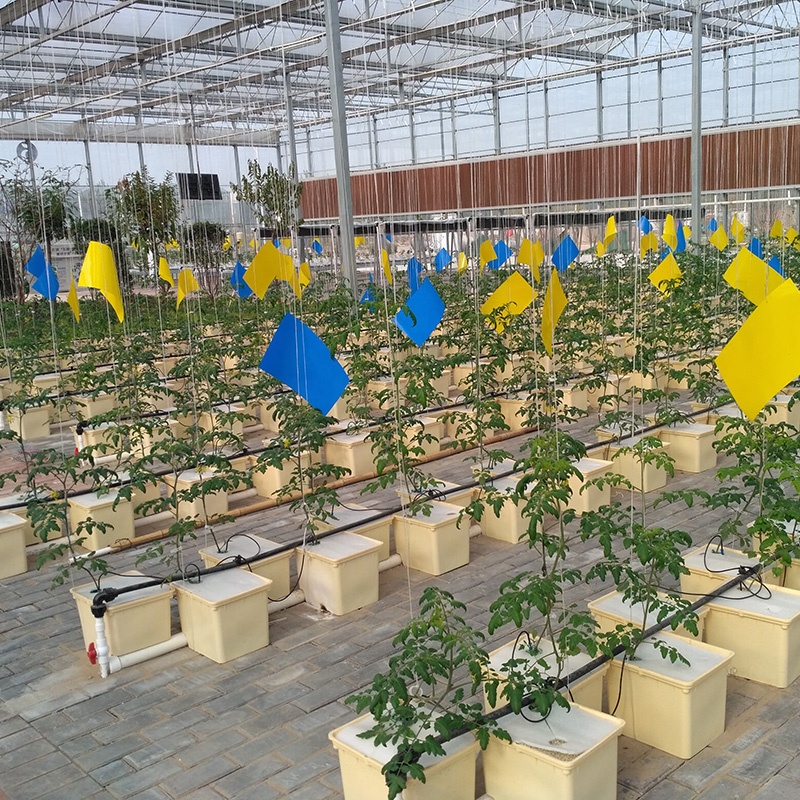
Each Dutch bucket contains a single plant or plant pair, with nutrient solution delivered through a drip irrigation line to each bucket's substrate. The sloped bucket bottom drains into a collection channel that returns excess nutrient solution to the central reservoir for recirculation and replenishment. This closed-loop design minimizes fertilizer consumption while maintaining precise nutrient concentrations around each plant's root zone.

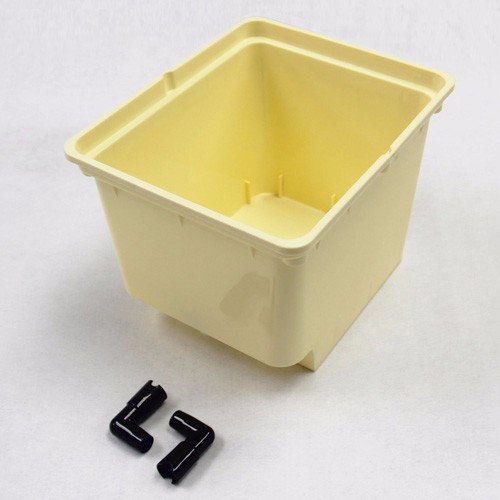
The bato bucket design, originating from Dutch greenhouse horticulture, features a distinctive conical bottom shape that promotes complete drainage and prevents standing water. Each bucket sits elevated on a support rail, allowing drainage water to flow freely into the trough below. The air gap between bucket bottom and collection channel provides natural root zone aeration that supports beneficial oxygen levels in the root environment.
Tomato production in Dutch bucket systems typically achieves yields of 45-65 kg per square meter annually, depending on variety, climate control capability, and growing season length. The individual plant management approach enables targeted irrigation scheduling that matches each plant's developmental stage, from vegetative growth through flowering and fruit set. Growers can identify and address individual plant issues before they spread, maintaining uniformly high performance across the entire crop.
Substrate selection for Dutch bucket tomatoes typically includes rockwool cubes, coco coir, or perlite, each offering different water holding and drainage characteristics. Rockwool provides sterile, homogeneous conditions with predictable moisture retention, while coco coir offers buffered cation exchange capacity that stabilizes nutrient availability. Many commercial operations prefer coco coir for its sustainability profile and excellent root zone oxygenation characteristics.
Nutrient solution management in Dutch bucket systems requires careful attention to electrical conductivity (EC) and pH levels at both the supply and drain outlets. The drain EC typically runs 20-30% higher than feed EC due to transpiration concentration, with experienced growers monitoring this differential to detect irrigation timing issues. Automated dosing systems maintain target nutrient concentrations by measuring drain water conductivity and adjusting concentrate injection rates accordingly.
Support infrastructure for Dutch bucket tomatoes includes overhead trellising systems with individual plant strings that support the leader stem as the plant grows. Pruning to a single or double leader maintains manageable canopy dimensions while optimizing fruit exposure to light. Regular deleafing of lower mature foliage improves air circulation around the plant base and redirects photosynthate to developing fruit clusters.
Harvest logistics benefit significantly from the Dutch bucket system's distributed layout, with consistent access pathways between bucket rows enabling efficient picker movement. The individual bucket identification enables batch harvesting by variety or planting date, supporting quality segregation and inventory tracking throughout the production cycle. Combined with integrated pest management protocols and biological control agents, Dutch bucket systems deliver the predictable, scalable production that commercial greenhouse operations require.
