
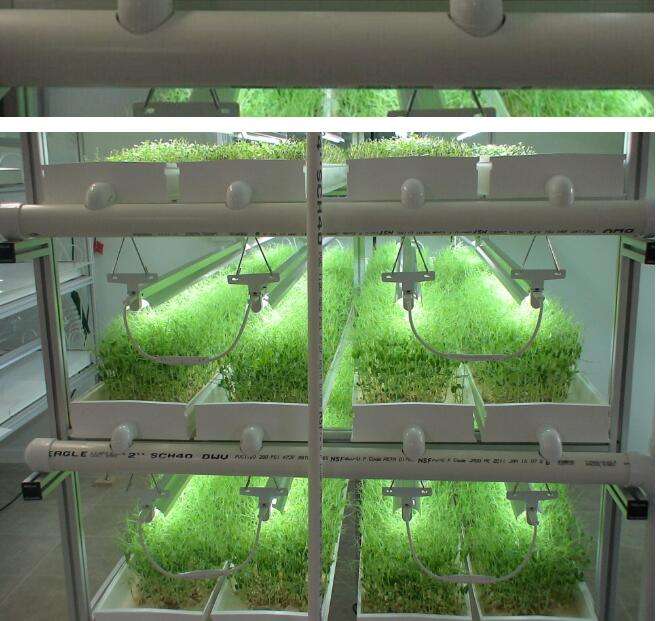
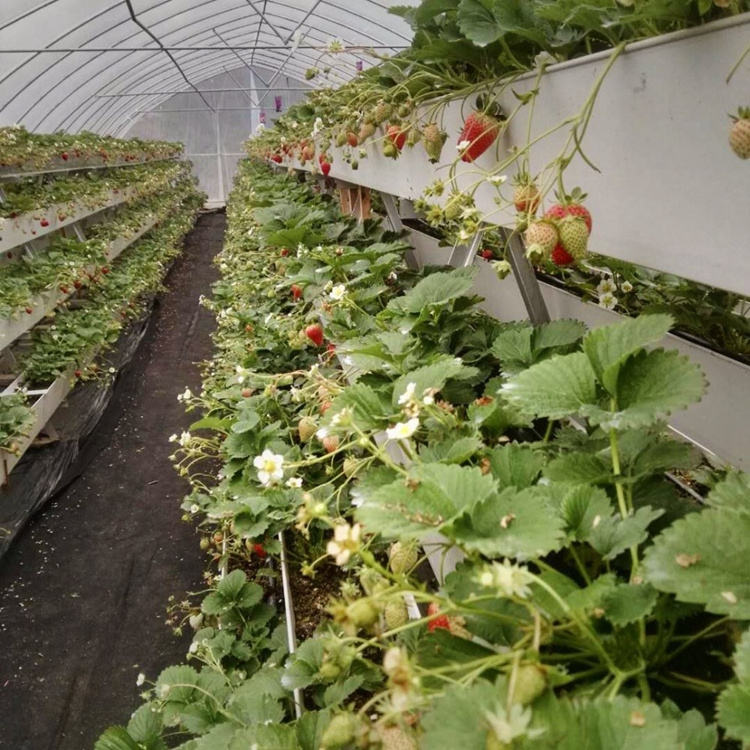

The Challenge of Outdoor NFT Deployment
Traditional NFT systems require greenhouse enclosures to protect components from ultraviolet radiation that degrades plastic materials and destabilizes nutrient solutions. The additional cost of greenhouse structures often makes outdoor NFT production impractical, limiting growers to controlled-environment facilities that require significant capital investment.
Anti-UV NFT channels resolve this limitation through UV-resistant material formulations that withstand direct sunlight exposure for extended periods without degradation. These channels maintain structural integrity and nutrient solution stability under outdoor conditions, enabling NFT production in regions where greenhouse construction is cost-prohibitive or where natural light conditions exceed what greenhouse structures can optimize.
UV-Resistant Material Technology
Anti-UV channels utilize advanced polymer formulations incorporating UV-stable additives that prevent the chalking, brittleness, and color degradation common in standard PVC components under sun exposure. These material advances enable service lives of 10+ years in outdoor installations, matching the durability of traditional greenhouse infrastructure while eliminating the greenhouse structure itself.
The UV-resistant properties extend to nutrient solution containers and supply lines, preventing algae growth that clogs emitters and degrades solution quality in standard systems. This maintains irrigation uniformity throughout the production area while reducing maintenance requirements for cleaning and system restoration.
Fully Automatic Operation Requirements
Outdoor NFT systems require full automation to manage the greater environmental variability compared to greenhouse installations. Automated nutrient dosing responds to real-time EC and pH measurements, adjusting formulation in response to plant uptake patterns that vary with solar radiation, temperature, and humidity conditions.
Weather-responsive irrigation scheduling adjusts nutrient delivery based on evapotranspiration rates calculated from ambient conditions, preventing both water stress during hot dry periods and overwatering during cool humid phases. These automated responses maintain consistent production quality despite environmental variability that would require constant manual adjustment in semi-automatic systems.
Production Performance in Outdoor Conditions
Anti-UV NFT systems achieve comparable yields to greenhouse NFT configurations in regions with favorable climate conditions, with yield differences primarily reflecting temperature management capability rather than channel technology limitations. In mild-climate regions, outdoor anti-UV NFT often outperforms enclosed greenhouse production due to superior natural light availability and airflow ventilation.
Conclusion
Anti-UV NFT channels enable commercial hydroponic production in outdoor environments previously considered unsuitable for NFT technology, dramatically expanding the geographic applicability of recirculating hydroponic systems while reducing infrastructure costs through elimination of greenhouse structures.
